evolve CIMA Frameset Size Guide
Getting the right bike size is a must for comfortable riding. Discover how to accurately measure your body dimensions and then find the frame size that suits you best.
SKIP THE GUIDE AND START SIZING
Guide to evolve CIMA Frameset Sizes
We understand the challenges of buying a bike online. So evolve actually is deicated to building up dense service network by developing worldwide bike distributors and bike shops in the first year the brand is set up, where you can have a trail, do a fitting and get your best fit.
If there’s no nearby bike shops in your city or is not always feasible for everyone to go to offline shops., there’s not need to worry at all, evolve official website offers 24 hour online service and will give you our recommendations. And here evolve is to ensure you have the right size bike by offering you this size guide.
Contents:
- Overview of evolve’s bike sizes
- How do you measure yourself properly in order to find your evolvebike size?
- Are Bike Frame Size Charts Accurate? What They Get Right—and Wrong
- Frame Size Considerations for Riders with Long Legs or Short Torsos
- How does my riding experience level affect which size I should choose?
- Do shoe size or foot length affect bike sizing?
- What are the signs that my bike frame is too big or too small?
Overview of evolve’s bike sizes
At evolve, we believe that great performance begins with the right fit. The philosophy behind CIMA’s geometry can be summarized in one principle: geometry first, rider centered. Rather than simply designing around numbers, CIMA is engineered to deliver the same balanced, high-performance riding experience across every frame size, ensuring that each rider feels as though the bike was built specifically for them.
CIMA is available in six carefully developed frame sizes, covering riders from approximately 146 cm to 202 cm. Instead of scaling the frame proportionally, each size has been individually optimized to maintain consistent handling characteristics throughout the range. By carefully refining the relationship between Stack and Reach (STR), every CIMA frame offers predictable, confidence-inspiring handling, avoiding the overly nervous feel often found on smaller frames and the sluggish response that can affect larger ones.
Beyond selecting the correct frame size, CIMA also provides additional adjustment possibilities for riders seeking an even more personalized position. Options such as different fork offsets, bottom bracket drops, and component sizing allow experienced riders and professional bike fitters to fine-tune the bike according to individual flexibility, riding style, and performance goals.
Like today’s leading performance road bikes, including the Specialized Tarmac SL8, CIMA follows the industry’s modern fitting philosophy by using Stack and Reach as the foundation of frame selection. If you already know your preferred size on another performance road bike, you can confidently use it as a starting reference when choosing your CIMA. Our online Size Guide and professional bike fitting recommendations will help you identify the ideal fit with confidence.
While the sizing principles remain the same for every rider, some riders may benefit from additional considerations. Women often have relatively shorter torsos and arm lengths, making Reach and handlebar width particularly important for long-term comfort. A slightly shorter cockpit or narrower handlebar can often create a more natural riding position without changing frame size. For younger riders, safety should always come before future growth. A correctly sized frame with adequate standover clearance and proper riding posture will always provide a safer and more enjoyable experience than choosing a frame that is too large.
Ultimately, CIMA’s geometry is designed with one goal in mind: to combine scientific geometry with real-world ergonomics, allowing every rider to experience a bike that feels naturally balanced, efficient, and uniquely tailored to them.
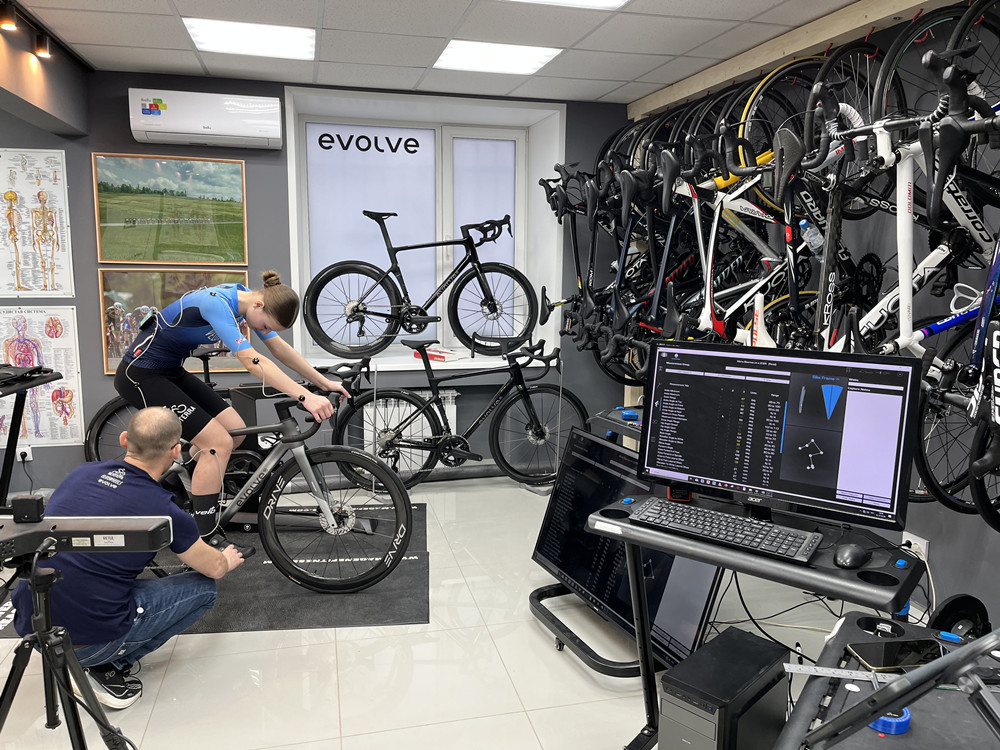
How do you measure yourself properly in order to find your evolve bike size?
It takes just 5 minutes and 2 measurements to find your perfect fit. You’ll need:
A wall
A tape measure
A spirit level or book
A helper (if you have one)
A pencil
START YOUR SIZING
Finding your height:
- Stand barefoot with your heels, back, shoulders and head against a wall
- Look straight ahead with your chin tucked in
- Carefully place a book or spirit level on your head and slowly push it against the wall, so it’s parallel to the floor
- Mark where the bottom of the book is touching the wall
- Measure from here to the floor – this is your height
Finding your inner leg length:
Take extra care when taking this measurement as it’s the most important factor in getting the right bike size.
- Wear cycling shorts and no shoes
- Stand with your back against a wall
- Tuck a spirit level or book between your legs
- Pull up the spirit level into your crotch with both hands. This is where your saddle would be
- The top edge of the spirit level to the ground is your inner leg length
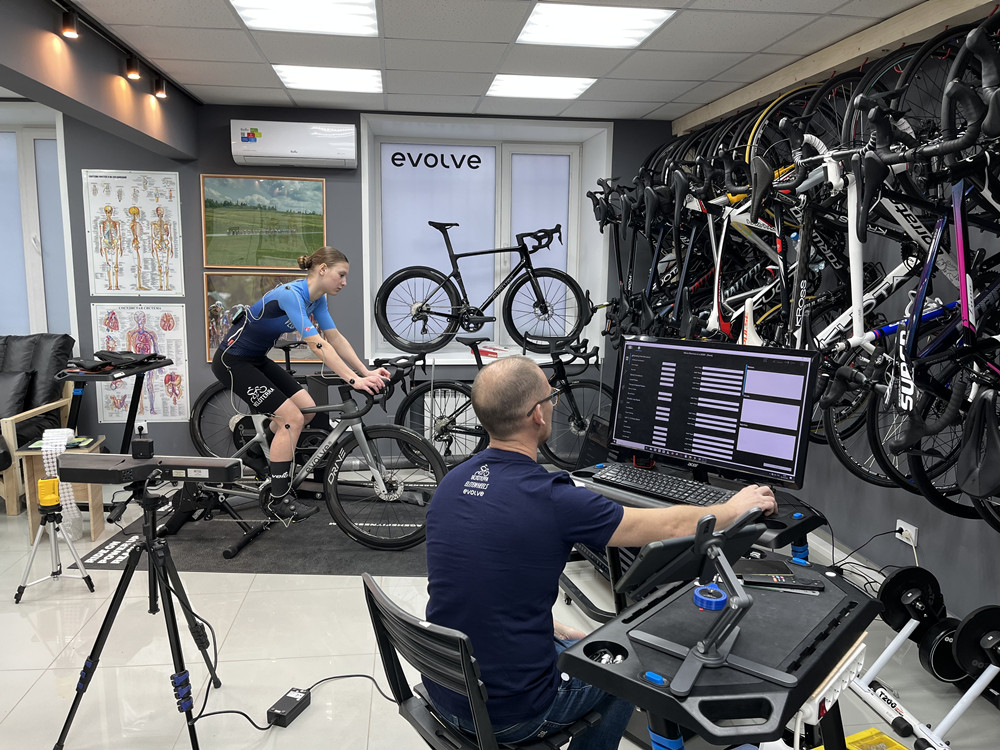
Are Bike Frame Size Charts Accurate? What They Get Right—and Wrong
Bike frame size charts are a useful starting point, especially for narrowing down options when shopping online or comparing models. They usually rely on rider height and sometimes inseam length, which can place most riders within a generally workable size range.
What size charts get right is baseline compatibility. They are effective at preventing obvious mismatches—such as putting a very tall rider on an extra-small frame. For many recreational riders, following a chart will result in a bike that is rideable and reasonably comfortable.
However, size charts fail to account for individual body proportions. Two riders of the same height can have very different leg-to-torso ratios, arm lengths, and flexibility levels. These differences strongly influence reach, saddle height, and overall fit but are invisible to height-based charts.
Additionally, charts do not reflect riding style or goals. A relaxed endurance rider and an aggressive racer may both fit the same frame size on paper but prefer very different geometries. This is why charts should be treated as guidance, not a final answer.
Frame Size Considerations for Riders with Long Legs or Short Torsos
Riders with long legs and short torsos often face fit challenges because standard frame sizing assumes average proportions. Height-based sizing may suggest a larger frame, but this can result in excessive reach and discomfort in the upper body.
In these cases, prioritizing stack and reach over seat tube length is essential. A smaller frame with adequate stack can allow proper saddle height without forcing the rider too far forward. This helps maintain a neutral spine and relaxed shoulders.
Component choices become especially important. A shorter stem, compact handlebars, and careful saddle positioning can fine-tune fit, but they can only compensate so much. Starting with the right frame geometry is key.
Some brands design frames with proportion-specific geometry or offer more size increments, which benefits non-average body types. Riders with long legs and short torsos should pay close attention to geometry charts rather than relying on labeled frame sizes alone.
How does my riding experience level affect which size I should choose?
Beginner riders typically benefit from a slightly more conservative fit. A frame that offers a more upright position improves comfort, confidence, and bike handling, especially at lower speeds or in traffic. Stability is often more important than aerodynamics at this stage.
Intermediate riders may start to prioritize efficiency and responsiveness. At this level, choosing a size that allows a balanced position—without excessive spacers or extreme component changes—helps support longer rides and skill development.
Advanced or competitive riders often select frame sizes that enable aggressive positioning. This might mean choosing a frame with longer reach or lower stack to optimize power transfer and aerodynamics. However, this assumes good flexibility and strong bike-handling skills.
Experience also affects awareness. Skilled riders can recognize subtle fit issues early, while beginners may misinterpret discomfort as normal. This makes proper sizing even more important for less experienced cyclists.
Do shoe size or foot length affect bike sizing?
Shoe size does not directly determine bike frame size, but it does influence cleat positioning and pedal alignment, which affect overall fit. Larger feet can change effective leg extension and leverage during pedaling.
Foot length can impact saddle height and setback indirectly. If cleats are positioned too far forward or back to compensate for foot size, knee tracking and hip stability may be affected. Over time, this can cause discomfort even if the frame size is correct.
Shoe size also matters for toe overlap, especially on smaller frames. Riders with large feet may experience toe overlap with the front wheel during tight turns, which can be annoying or unsafe at low speeds.
While shoe size alone won’t change which frame size you should buy, it reinforces the importance of holistic fitting. Frame size, crank length, saddle position, and cleat setup all work together.
What are the signs that my bike frame is too big or too small?
A bike frame that is too large often causes excessive reach. Common symptoms include locked elbows, shoulder or neck pain, difficulty reaching the handlebars, and unstable handling at slow speeds. Riders may also feel stretched even with a short stem.
If a frame is too small, the bike may feel cramped or twitchy. Signs include knee pain from limited saddle height adjustment, excessive seatpost extension, and a sensation of being “on top of” the bike rather than integrated with it.
Handling feedback is another indicator. Oversized frames can feel sluggish and hard to maneuver, while undersized frames may feel nervous or unstable at high speeds. Neither is ideal for efficiency or confidence.
Finally, excessive component adjustments are a red flag. If your bike requires extreme saddle setback, an unusually long or short stem, or many spacers, the frame size is likely incorrect. A properly sized frame should need only moderate adjustments.
A perfect size means a perfect bike
When you know which bike you want, simply put your measurements into the size calculator on the product page. Your new bike awaits.