Frederik Niessen: Never Settling for Less
A hospital night shift. Seven hours in traffic. Forty-five degrees inside a car. A punctured tire the night before the race.
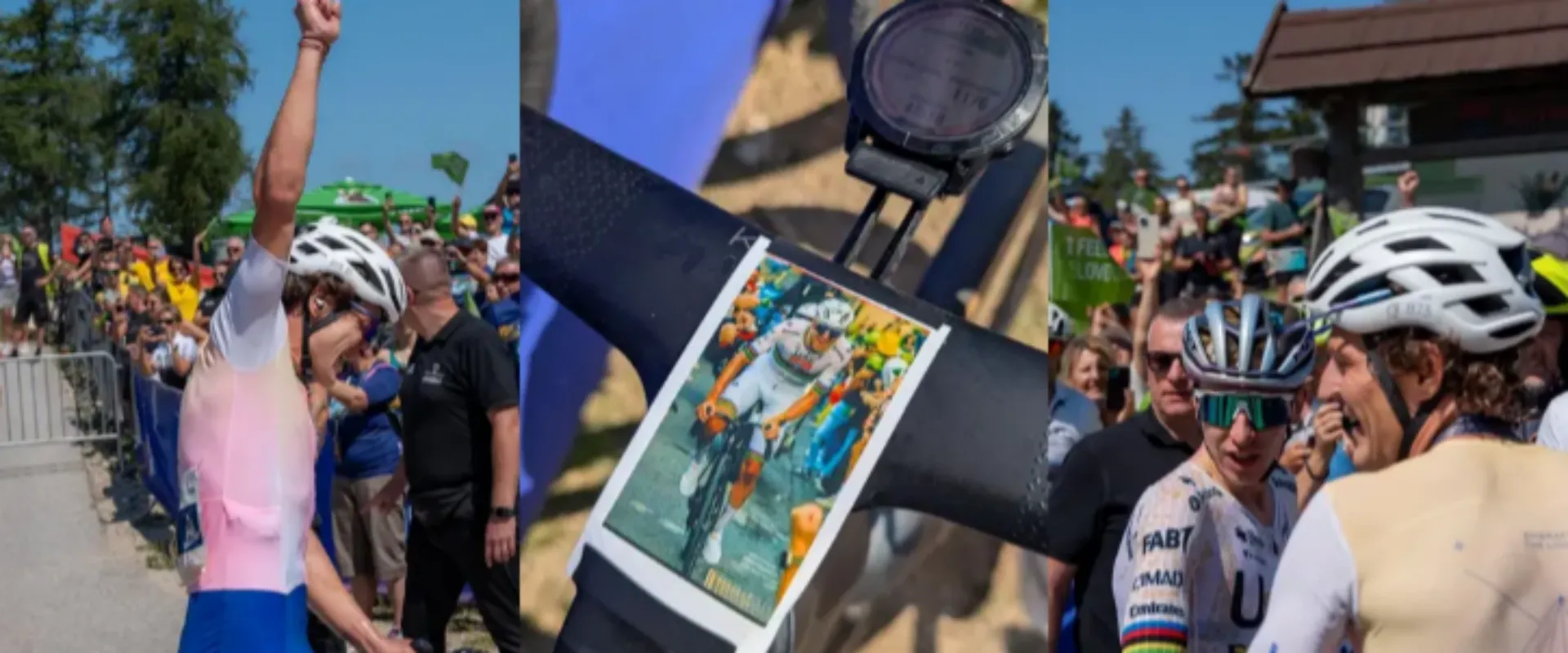
The next morning, Frederik Niessen lined up at the Pogi Challenge in Slovenia and produced the fastest ride in the field.
But the story behind that result started long before the start line — with a fifteen-year-old in Berlin who simply wanted to get in shape, an old bicycle borrowed from his father, and a feeling that never really left him.
Today, Frederik is a medical doctor, cycling coach and dedicated climber. His approach to cycling is shaped by science, curiosity and a simple belief: there is always another level to pursue.
How We Met Frederik
We first came across Frederik’s name on the Pogi Challenge results sheet. What caught our attention was not only his result, but the bike beneath him: an evolve CIMA.
At first, we assumed he was riding through one of our European dealers or partners. We checked our records and discovered something more interesting. Frederik had purchased the CIMA himself, directly from our website, months before the race.
“I could have bought another S-Works. But I said, no — I really like their approach, and I’m going to trust them. And my feeling was absolutely right.”
That was what made us want to hear the story in his own words. What followed was a conversation about cycling, coaching, competition, music, balance and the decisions that shape a rider long before the numbers appear on a results sheet.

(The day, resource: @heyfrederik)
From Commuter to Climber
Frederik’s cycling journey did not begin with racing ambitions. It began with a teenager who wanted to lose a little weight.
“I was always a bit chubby as a kid. So I just grabbed an old bike from my father and started riding.”
His father, a biologist who cycled regularly around Berlin, had always kept bicycles around the house. At fifteen, Frederik took one of them and started riding. He lost the weight, but discovered something more lasting.
“What really stuck with me is just the simple motion — how much it clears your mind. I’m absolutely still in love with it.”
That curiosity soon became part of how he approached the sport. He read about training science, looked closely at data and began to understand performance not simply as a number, but as something that could be studied and improved.
That mindset eventually led him into coaching. Alongside his work as a medical doctor, he began helping other cyclists understand their own potential. Last summer, he decided to shift more of his focus toward coaching — and with that came another decision: it was time to race again.
“I told myself, next year, you’re going to race more. You’re going to do races you know you could be good at.”
He packed his car and drove to the Canary Islands in November, spending five months doing base training under the winter sun. He slept in his car. He cooked on a gas stove. He lived minimally, trained relentlessly, and built the foundation for everything that would follow.
The Pogi Challenge: Chaos, Composure and a Punctured Tire
Frederik entered the Pogi Challenge only two months before the event. He was drawn by the climbing and by the chance to test himself in a race that had quickly gained attention after its first edition.
“I didn’t have any expectations. I just said, ‘Come on, why not? Let’s go there.’”
The preparation for race day was anything but conventional.
The night before the race, Frederik worked a hospital night shift. On Saturday morning, he drove from Austria to Slovenia. A journey that should have taken around three hours turned into seven or eight.
“It turned into seven or eight hours. I was stuck in a traffic jam on the highway the whole day. Forty-five degrees in the car. No air conditioning. Europe was in a constant heat wave.”
He arrived dehydrated and with a headache — unusual for him — and still had to collect his race number. Then, on the way, he punctured.
With TT tires on a tubeless setup, the puncture could easily have ended the weekend before the race had even started. Instead, Frederik plugged the tire, pumped it back up, added sealant and accepted the uncertainty.
“If this doesn’t work out for tomorrow, it’s fate.”
The tire held.
The next morning, Frederik lined up for the climb. Tadej Pogačar had given the field a seven-minute head start. Frederik delivered a powerful ride, producing around 390 watts for 45 minutes and approximately 5.8 watts per kilogram on the decisive Strava segment.
When the result was clear, Frederik was quick to put it into perspective.
“I will never say I beat Pogačar — because he gave us seven minutes. He is still faster.”
Asked what mattered most, his answer was not power or preparation. It was composure.
“Despite all the complications on Saturday, I managed to stay really calm. I kept telling myself: you can only do the best you can in this situation. If it’s meant to work out, it’s going to work out. If it doesn’t, it won’t.”
That balance between ambition and acceptance is also central to the way he coaches.
Choosing His Own Line
Frederik first came across evolve while browsing PandaPodium. A few weeks later, a review of the CIMA by Joe from PandaPodium caught his attention.
“I was browsing the PandaPodium website, and I saw the CIMA frame. A few weeks later, Joe from PandaPodium posted a review video on YouTube, and that really caught my attention.”
At the time, he was looking for a second racing bike. He already had an S-Works, and there was no obvious financial reason to move away from a familiar choice. What mattered was something else: the way evolve communicated about the product.
“What actually made me trust evolve was how transparent you were, about the colorways, the exact weights, everything. I really liked that approach of being open and transparent. I found that really sympathetic.”
He read the CIMA white paper, looked through the specifications and made his decision.
“I could have bought another S-Works. But I said, no — I really like their approach, and I’m going to trust them. And my feeling was absolutely right.”
When the Bike Disappears Beneath You
Frederik ordered the CIMA frame in April and had it built by the beginning of June. His first impression was immediate.
“From the first time I sat on it, I was like — okay, this is better than my S-Works. In every sense.”
He noticed the combination of low weight and stiffness first, but what stayed with him most was how the bike felt underneath him.
“When you ride it, you think: how can they put such stiffness into a 650-gram frame?”
“Even using the same wheelset as on my S-Works before, the CIMA is so much smoother and nicer to ride. It makes you feel like you’re one with the bike.”
For Frederik, that feeling is not simply about comfort. When an effort lasts 45 minutes and every part of the body is working, anything that creates a sense of separation between rider and machine can become a distraction.
“If there’s something making you feel disconnected from the bike, that’s bad — that’s going to steal your performance. But if you feel as one with your bike, that helps you push more and get into the perfect flow. And that’s exactly the feeling I have on the CIMA.”
The CIMA has also become an easy conversation starter at races and group rides. Riders who recognize the brand often want to know more; others simply ask what kind of bike it is.

(Frederik’s race bike setup, resource: @heyfrederik)
More Than Numbers
For someone who spends so much time around training data, watts and performance metrics, Frederik’s reason for riding remains surprisingly simple.
“One thing that has always stayed the same is that it helps me get away from the rest of my life. Sometimes my head just needs to shut off and ride a bike. Be outside. Get some fresh air. Be in nature.”
There is music, too. Frederik is a devoted fan of electronic music and often rides with it. For him, the combination of movement and music creates something beyond training.
“The combination of physical exercise and having a perfect track in your ears — it’s pure euphoria. Some people say they couldn’t do that, it annoys them. But for me, it’s synergy. Music and movement.”
His personal philosophy is simple: don’t settle for less. It applies to training, work and the way he approaches everyday life.
“That really keeps me going. To evolve, basically.”
What’s Next
Frederik’s season is far from over. He plans to race every weekend through October, with longer marathon events of four to seven hours ahead. The next challenge is building the durability to complement the climbing power that has already become one of his strengths.
There is also a longer-term goal: the Taiwan KOM Challenge, the legendary climb from sea level to 3,725 meters.
“That would be really nice.”
When he learned that evolve’s own co-founders are targeting the same climb — and that the CIMA Taiwan, China special edition carries the number 3,725 on its top tube — his answer was characteristically simple.
“Then maybe I should.”
Asked to describe his journey with the CIMA in a single sentence, Frederik paused before answering.
“It’s been eye-opening about what a bike — what a super modern race bike — can do and achieve.”
Keep Evolving.
Frederik’s story is not really about a single race, a single result or even a single bike.
It is about curiosity. About choosing a harder road because it is more interesting. About balancing ambition with perspective, science with feeling, and competition with the simple freedom of riding a bike.
He started riding at fifteen because he wanted to get in shape. Years later, he is still riding for the same reason that many people start, because once you find what cycling gives you, you keep coming back.
Keep Evolving.